

You’ve decided to learn Arabic online, but the process can sometimes feel disconnected. You’re studying grammar rules from a screen, far away from the busy streets and bustling markets of the Arab world.
However, choosing to focus your studies on the context of a specific region, like the Levant (Jordan, Lebanon, Syria, Palestine), can dramatically accelerate your Arabic journey. This is true even if you are learning from the other side of the planet! By leveraging the geographic context and atmosphere of the Levant, you deepen your understanding and gain a massive advantage in fluency.
The Benefit of a Clear Dialect
The Levant, particularly Jordan’s capital, Amman, is widely recognized for having one of the clearest and most understood forms of Levantine Arabic. This dialect is often considered a great bridge between Modern Standard Arabic (MSA) and the other regional dialects.
- Ease of Learning: The Levantine dialect is known for its relatively clear pronunciation and consistent structure compared to some North African or Gulf dialects.1 For Arabic for beginners, starting with a clear, accessible dialect makes the speaking process much less intimidating.
- Widespread Understanding: Because of the history and media influence of the region, the Levantine dialect is widely understood across the entire Arab world.2 What you learn will be relevant far beyond Jordan’s borders.
Choosing a geographically grounded approach simplifies your goal. Instead of trying to master all Arabic, you focus on one powerful, understandable version.
Engaging with Authentic Materials
The greatest advantage of focusing on a region is the wealth of accessible, authentic learning materials and native speakers. This is how to master the spoken Arabic for non Arabs.
- Real Media Immersion: When you focus on the Levant, you can easily access regional media—TV shows, movies, music, and podcasts—created in that specific, clear dialect.3 Engaging with these materials regularly is the best kind of Arabic listening exercises because they use natural speed, slang, and cultural references. This is much better than listening to scripted textbook audio.
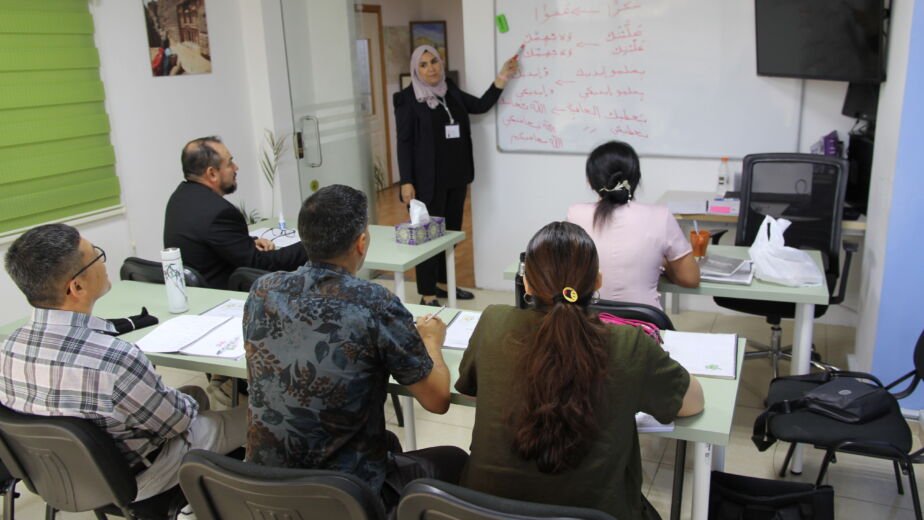
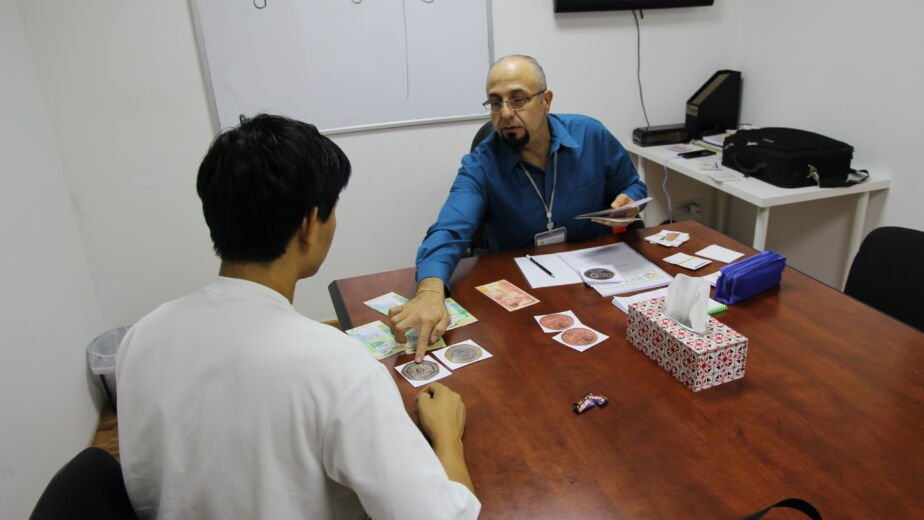
- Direct Speaker Access: When you learn online with Komensky Center, you are often connecting with native Arabic speakers who live and breathe that regional context. They bring the atmosphere of Jordan or the streets of Beirut right into your virtual classroom. They don’t just teach the words; they teach you how those words are used in real life—the laughter, the slang, and the cultural shorthand.
Bringing the Land to Your Screen
Even if you can’t physically be there, focusing your studies on a specific place helps you create a rich mental picture.
When your teacher talks about ordering mansaf (Jordan’s national dish) or navigating downtown Amman, you are not just learning vocabulary. You are anchoring the language to a real place, a real scene, and real emotions. This makes the words stick better in your memory.
Your Arabic language course becomes less about abstract rules and more about preparing for a real world experience. The geography is not just a backdrop; it is a catalyst that makes your learning immediate, relevant, and deeply effective. By choosing a clear regional focus, you give your language skills a destination.
Ready to anchor your learning in the vibrant culture of the Levant? Explore our courses focused on the clear and widely understood Levantine dialect!